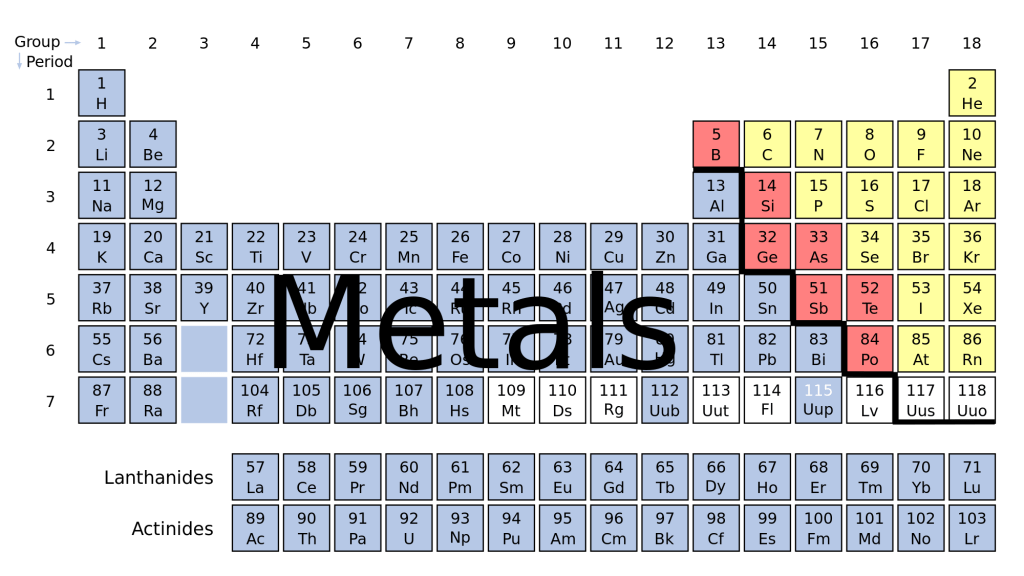
Today’s chemistry study session was a full revision of metals, but instead of treating it as a simple recap, I approached it with deeper understanding and more advanced reasoning. Metals are one of the most important topics in IGCSE chemistry, and going through everything again helped me see how all the ideas connect.
I began with the properties of metals, revisiting why they conduct electricity, why they’re malleable, and how metallic bonding creates a structure where positive ions sit in a “sea” of delocalized electrons. What felt simple before now made much more sense when I linked these properties directly to their atomic structure.
I reviewed the reactivity series, not just memorizing the order but understanding why certain metals react more vigorously than others. The idea of electron loss and ease of oxidation helped explain why metals like potassium and sodium react explosively, while copper barely reacts at all. This deeper view made the whole reactivity series feel logical instead of random.
Then I went through the methods of extracting metals from ores, such as using electrolysis for reactive metals and carbon reduction for less reactive ones. I focused on the reasoning behind each method — how the position in the reactivity series determines the extraction process, and why different ores need different treatments. This part connected chemistry to real industrial processes, which made it more interesting.
I also revised the reactions of metals with acids, water, and oxygen, paying attention to the patterns in products and the conditions needed for each reaction. Understanding why certain metals form specific ions or oxides helped me solve the more complex questions in past papers.
Finally, I practiced advanced questions involving metal displacement, redox reactions, and identifying unknown metals through reasoning rather than memorization. These problems required careful thought, comparing reactivity, and predicting outcomes step by step.
Overall, this revision session helped me turn scattered knowledge into a clear system. Metals aren’t just a list of facts — they form an entire framework in chemistry, connecting bonding, reactivity, extraction, and real-world applications. Studying them again made everything sharper and more satisfying
 Louis La Minh Hoang
Leave a comment