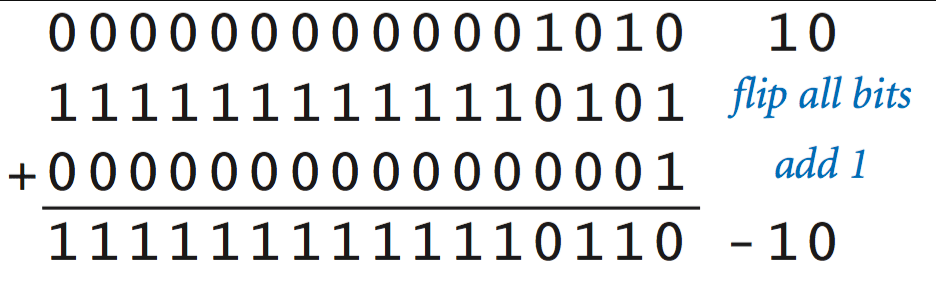
Today’s computer science lesson was all about going deeper into how computers actually handle numbers. Instead of just writing values in decimal, we focused on binary — and more specifically, how computers perform addition, subtraction, and negative number representation using 2’s complement. Even though I’ve used binary before, this lesson finally connected all the pieces together into one complete system.
We started with binary addition, which at first seems simple, but becomes tricky when carries move several columns at once. The cool part is realizing that computers do this automatically using logic gates, while we simulate the same steps on paper. After getting comfortable with addition, the real highlight came when we started subtracting binary numbers using 2’s complement. Instead of teaching subtraction as a separate method, we learned that a computer never actually subtracts. It adds the negative, and the negative is created through the 2’s complement process: flip the bits, add 1, and suddenly the computer can treat subtraction as pure addition.
It felt satisfying to see everything click together — especially when checking results with overflow rules and understanding why sometimes numbers “wrap around.” These are the little details that explain how actual computer processors think.
By the end of the lesson, I could convert numbers, take 2’s complement without hesitation, add and subtract binary values accurately, and explain every step logically. It wasn’t just memorizing steps — it was understanding the system behind digital arithmetic. Overall, this lesson made me feel like I was getting closer to how real computers process information internally, one bit at a time.
 Louis La Minh Hoang
Leave a comment