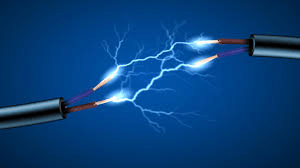
My physics lesson yesterday was a full revision session on electricity, covering almost everything from the basics to the deeper reasoning behind each concept. Even though it was a revision, the class was packed with details — the kind that really test whether you understand electricity or you only memorized formulas.
We went through current, voltage, resistance, and all the relationships between them. It wasn’t just the usual “V = IR” and move on. Instead, we focused on why each formula works and what actually happens inside the circuit. Series and parallel circuits became more than just diagrams; we had to break down how charges flow, how energy transfers, and how total resistance behaves in different setups. The teacher kept emphasizing logic, not memorization.
One of the most important parts was interpreting circuit problems in multiple steps. Instead of solving instantly, we practiced reducing complex circuits into simpler ones, checking current direction, and predicting how changing one component affects the entire system. At this level, even a tiny mistake in reasoning can flip the whole answer.
We also revisited power, energy, and efficiency. Even if the formulas are simple, the problems often involve multiple ideas at once — converting units, understanding how devices consume power, or analyzing why some appliances waste more energy. The challenge wasn’t the formulas but making sure every step stayed consistent and physically correct.
By the end of the revision, I felt more confident because the class didn’t just refresh facts; it refined the way I think through electricity questions. It’s the kind of lesson that sharpens both speed and accuracy, making even familiar topics feel much more solid.
 Louis La Minh Hoang
Leave a comment