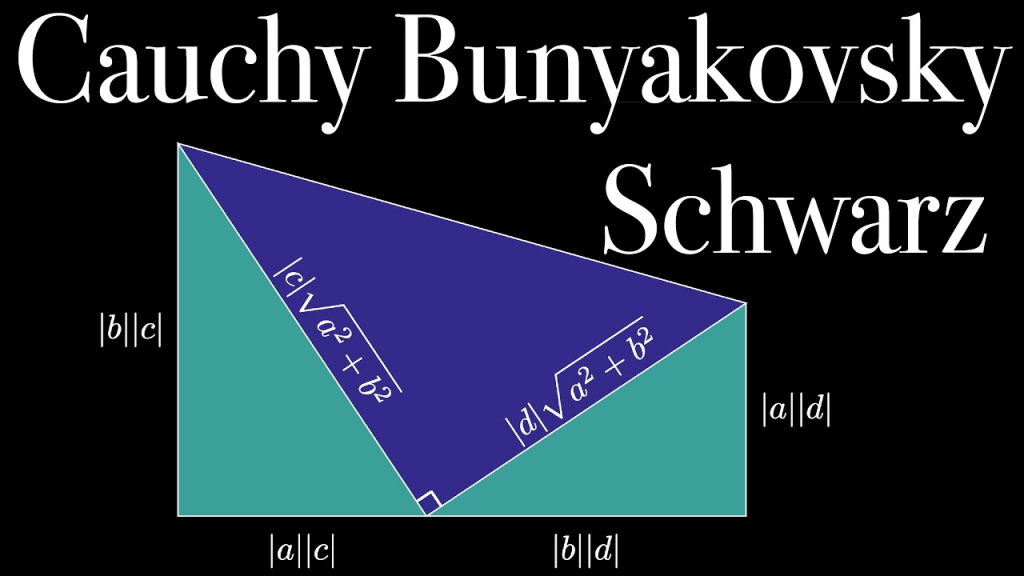
In this math lesson, I focused on complex inequalities through the use of specific and powerful inequality theorems, rather than trial-and-error or graphing alone. The emphasis was on recognizing structure and choosing the right theorem to simplify a difficult-looking problem.
A major part of the lesson involved applying classic results such as the AM–GM inequality (revision only), Cauchy–Schwarz inequality, and basic forms of Jensen’s inequality in algebraic settings. These theorems allowed complicated expressions to be bounded cleanly, turning messy inequalities into elegant arguments. Understanding the equality cases was especially important, since they often determined the exact conditions for maximum or minimum values.
We also worked with inequalities derived from completing the square and rearranging expressions into always-nonnegative forms. This approach made it possible to prove inequalities rigorously and to identify when an inequality holds for all real numbers versus only under certain constraints.
Some problems required combining multiple ideas, such as using AM–GM to estimate part of an expression and then refining the result with algebraic manipulation. Others involved symmetry, where recognizing interchangeable variables simplified the inequality significantly.
By the end of the lesson, complex inequalities felt less intimidating. With the right theorems and a clear strategy, even very difficult-looking inequalities became manageable. This lesson highlighted how inequality theory is not just about calculation, but about insight, structure, and mathematical elegance.
 Louis La Minh Hoang
Leave a comment