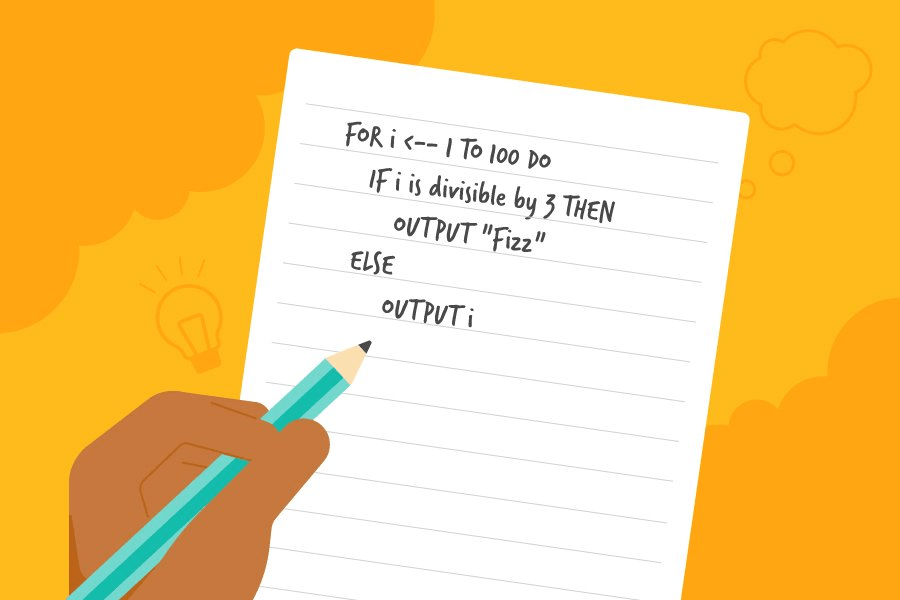
In this computer science lesson, I revised writing pseudocode, with a strong focus on applying the rules correctly in IGCSE past exam questions. The lesson wasn’t about learning new syntax, but about sharpening accuracy, clarity, and exam technique.
We went over the standard pseudocode conventions used in IGCSE, making sure structures like IF…THEN…ELSE, WHILE, REPEAT…UNTIL, and FOR loops were written clearly and logically. Small details mattered a lot, such as correct indentation, clear variable names, and making sure conditions were precise and unambiguous.
Most of the practice involved breaking down wordy exam questions into step-by-step algorithms. This required careful reading to identify inputs, processes, and outputs before writing any pseudocode at all. Jumping straight into code often led to mistakes, so planning was just as important as writing.
We also practiced using arrays, procedures, and functions where appropriate, especially in longer questions. Choosing when to use a loop or a procedure made the pseudocode more efficient and easier to understand, which is exactly what examiners look for.
By working through real IGCSE past questions, this revision made the expectations very clear. Writing good pseudocode is less about being clever and more about being logical, structured, and precise. This lesson helped me improve not only my pseudocode skills, but also my overall problem-solving approach in computer science.
 Louis La Minh Hoang
Leave a comment