• Today’s physics revision was all about radiation, but instead of treating it as a basic review, I focused on truly understanding the behaviour, patterns, and reasoning behind every concept. Radiation is a major part of IGCSE physics, and revisiting it with a sharper mindset made everything feel clearer and more connected.

    I began with the three main types of radiation — alpha, beta, and gamma — not just memorizing their properties, but examining why they behave differently. Alpha particles are massive and highly ionising because of their size and charge. Beta particles are fast-moving electrons that can travel farther. Gamma rays are pure electromagnetic waves with no mass, making them extremely penetrating. Seeing how structure influences behaviour made these differences feel logical rather than like random facts.

    Next, I reviewed penetration and ionisation, understanding how radiation interacts with matter. Instead of simply recalling which material blocks which type, I thought about how each particle loses energy, how ionisation causes damage, and why thicker or denser materials stop certain particles more effectively. This made radiation safety — shielding, exposure, and distance — make a lot more sense.

    I also revised half-life, not by just solving basic questions, but by analysing decay curves and explaining why radioactive activity decreases the way it does. Working through half-life graphs helped me understand how predictable radioactive decay is, even though the exact moment for any individual nucleus is random.

    The most challenging part of the revision came from past-paper style problems. These were not simple recall questions; they demanded reasoning. Some required identifying an isotope based on decay patterns. Others involved interpreting radiation readings, working out shielding effects, or explaining how contamination differs from irradiation. Each question forced me to think carefully about the physical process behind the answer.

    By the end of the session, I realized that radiation isn’t just about particles being emitted. It’s a balance of physics, probability, and structure. Revising it at a deeper level made the entire topic feel more intuitive and gave me more confidence in tackling advanced-style exam problems.

    Today’s revision wasn’t just refreshing old knowledge — it was strengthening my understanding of how radiation truly works.

  • Today’s chemistry study session was a full revision of metals, but instead of treating it as a simple recap, I approached it with deeper understanding and more advanced reasoning. Metals are one of the most important topics in IGCSE chemistry, and going through everything again helped me see how all the ideas connect.

    I began with the properties of metals, revisiting why they conduct electricity, why they’re malleable, and how metallic bonding creates a structure where positive ions sit in a “sea” of delocalized electrons. What felt simple before now made much more sense when I linked these properties directly to their atomic structure.

    I reviewed the reactivity series, not just memorizing the order but understanding why certain metals react more vigorously than others. The idea of electron loss and ease of oxidation helped explain why metals like potassium and sodium react explosively, while copper barely reacts at all. This deeper view made the whole reactivity series feel logical instead of random.

    Then I went through the methods of extracting metals from ores, such as using electrolysis for reactive metals and carbon reduction for less reactive ones. I focused on the reasoning behind each method — how the position in the reactivity series determines the extraction process, and why different ores need different treatments. This part connected chemistry to real industrial processes, which made it more interesting.

    I also revised the reactions of metals with acids, water, and oxygen, paying attention to the patterns in products and the conditions needed for each reaction. Understanding why certain metals form specific ions or oxides helped me solve the more complex questions in past papers.

    Finally, I practiced advanced questions involving metal displacement, redox reactions, and identifying unknown metals through reasoning rather than memorization. These problems required careful thought, comparing reactivity, and predicting outcomes step by step.

    Overall, this revision session helped me turn scattered knowledge into a clear system. Metals aren’t just a list of facts — they form an entire framework in chemistry, connecting bonding, reactivity, extraction, and real-world applications. Studying them again made everything sharper and more satisfying

  • Today’s physics lesson was all about graphs, but not the basic “read the value from the axis” type. We studied the deeper, more advanced side of interpreting graphs in physics — the kind that appears in electricity, pressure, heat, and motion. What made this session challenging wasn’t the content itself, but the level of analysis required to solve problems accurately.

    We started with speed–time and distance–time graphs, but instead of simple interpretations, we focused on how the shape of the graph reveals the exact behavior of an object. A straight line meant constant acceleration, a curve meant changing acceleration, and the area under the graph gave distance. The challenge came from unusual graphs: sudden jumps, piecewise curves, and sections that required integrating or comparing slopes carefully.

    Next, we worked with pressure–volume graphs, especially in contexts like gases and fluids. Here, the relationships weren’t linear, so solving problems required understanding how curves behave. A slight change in the graph’s steepness could completely alter the relationship. Many questions asked for energy changes or work done, which meant analyzing areas under curves rather than relying on formulas alone.

    Then came electricity graphs — current–time, voltage–time, and charge graphs. The key here was understanding that the graph’s gradient or area corresponded to physical quantities. Current–time graphs required integrating to find charge. Voltage–time graphs revealed potential differences that changed with time, especially in circuits involving components like capacitors. These problems required thinking in terms of relationships, not memorized rules.

    We also studied heating and cooling curves, where the graph’s flat sections represented phase changes. Instead of simply identifying the plateau, we had to reason about energy input, latent heat, and specific heat capacity, linking the graph’s shape to the physical behavior happening at each temperature region.

    Throughout the lesson, the biggest focus was on strategies rather than formulas. The teacher emphasized looking at three elements: the slope, the area under the curve, and the overall trend. Solving a graph problem meant translating a visual change into a physical explanation. Instead of just calculating, we had to justify why the graph looked the way it did and what that meant physically.

    By the end of the session, I realized how powerful graphs really are in physics. They don’t just show numbers; they reveal the entire story of a physical process. Understanding how to read them deeply is one of the most important skills in the subject, and today’s advanced practice made that clearer than ever.

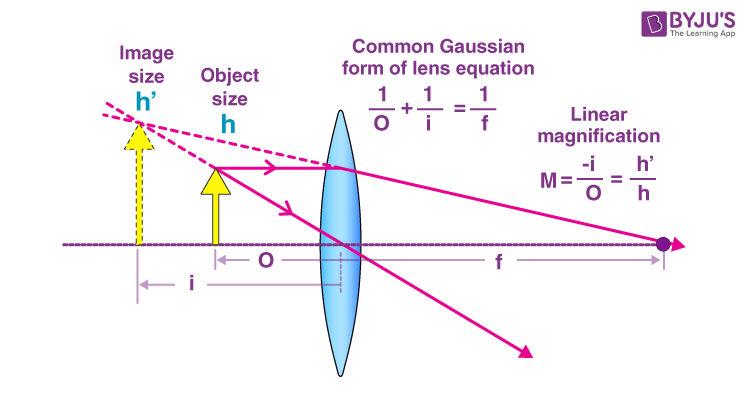
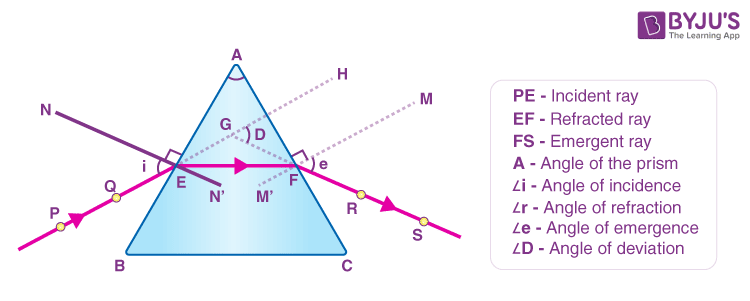
  • Today’s physics revision focused on plane mirrors, but not in the simple way we learned before. This session pushed everything into advanced geometric reasoning, where every reflection became a precise angle problem rather than just a quick sketch. It felt like a mixture of physics and high-level geometry combined into one challenge.

    We began by reviewing the basic rules of reflection, but the moment we started solving questions, everything became much more demanding. Instead of casually drawing rays, we had to work with exact angle relationships, using alternate interior angles, angle sums, and careful constructions. A single reflection wasn’t just “angle in equals angle out” anymore — it became a full geometric argument.

    The real difficulty appeared when dealing with two or three mirrors positioned at unusual angles. A ray reflecting from one mirror could hit another at a completely different orientation, and the only way to track it correctly was through step-by-step geometric reasoning. Each reflection had to be justified using triangle constructions, angle chasing, and similar triangle reasoning. Finding the final image point meant repeatedly reflecting the object across different mirror lines, building a chain of reflected points that followed strict geometric rules.

    We also explored situations where two mirrors face each other and create multiple images. Instead of memorizing formulas, we worked out why those images appear by understanding the repeating angles formed between successive reflections. It was surprising to see how something that looks simple in real life can turn into a full mathematical pattern once you dig into the reflections properly.

    The hardest questions involved mirrors placed at awkward angles like 37° or 53°. In these cases, even one small mistake in drawing or angle calculation would lead to a completely wrong result. Everything depended on accuracy and logical thinking, not memorization.

    By the end of the lesson, I realized that revising plane mirrors at this advanced level reveals how deep the topic actually is. Light follows perfect geometry, and when we trace it precisely, the entire problem becomes a beautiful, challenging structure of angles and symmetry. Even the simplest mirror can turn into a serious test of mathematical thinking when approached at this level.

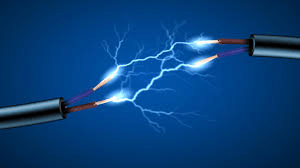
  • Today’s physics lesson took me deep into one of the most mind-bending topics yet — electromagnetism. It’s strange how something completely invisible can be so perfectly predictable through mathematics.

    We began with the basics of magnetic fields, revisiting how current-carrying wires create circular field lines, and how solenoids act like controllable magnets. But soon, we dove into the advanced part — how changing magnetic fields induce electric currents, and how that interplay builds the very foundation of our technology.

    The equations weren’t simple — they required not just algebra, but a strong geometric sense. Understanding the right-hand rule, field direction, and how flux changes across surfaces demanded precise visualization. We explored Faraday’s Law, Lenz’s Law, and how negative signs reveal nature’s tendency to resist change.

    Then came the thrilling part: the electromagnetic field — the unification of electricity and magnetism. We analyzed how a moving charge produces both electric and magnetic components, and how together they form Maxwell’s masterpiece — the electromagnetic wave. We didn’t just study the formulas; we examined how they behave, how they ripple through space at the speed of light, binding electricity and magnetism into one elegant theory.

    Our teacher challenged us with complex problems — not just plug-in calculations, but ones that required deep physical intuition: predicting the direction of induced currents, analyzing forces on moving conductors, and reasoning through three-dimensional field interactions.

    By the end, I realized — electromagnetism isn’t just a chapter in physics. It’s the architecture of reality itself. Every light beam, every Wi-Fi signal, every heartbeat monitored by a sensor — all of it comes from these swirling, intertwined fields we can’t see, but can understand through pure reasoning and mathematics.

  • Today’s math session was all about advanced differentiation — not just finding derivatives, but truly understanding how to use them. It felt less like mechanical computation and more like decoding the behavior of functions.

    We began with a quick revision of basic differentiation rules — product, quotient, and chain rules — just to warm up. But soon, we ventured into the advanced zone: second derivatives, curve sketching, and inflection analysis. It’s fascinating how one more layer of differentiation can reveal so much more about a function’s behavior.

    The second derivative isn’t just “the derivative of a derivative.” It’s a window into curvature, helping us see how fast a slope changes and whether a graph bends upward or downward. We practiced identifying concavity, locating inflection points, and interpreting them geometrically.

    But what made today’s lesson really advanced was the application part. We used first and second derivatives together to solve real-world optimization problems, like finding minimal surface areas or maximum efficiency points. Some problems involved implicit differentiation and parametric equations, which demanded careful step-by-step reasoning — one mistake in a chain rule, and the entire structure could collapse.

    The best part was exploring how second derivatives link back to motion and physics — understanding acceleration as the derivative of velocity, and curvature as the geometry of motion. It connected pure math to the physical world in such a powerful way.

    By the end, the revision came full circle: what began as a refresher turned into a deep dive into how calculus shapes everything — from graphs to growth, from speed to structure.

    It wasn’t easy, but it was deeply satisfying. Advanced derivation isn’t about memorizing formulas — it’s about seeing the soul of change itself.

  • Today’s math class took trigonometry to a whole new level — the advanced world of compound angles, where we learned how to work with expressions like sin(a + b), cos(a + b), and tan(a + b). It wasn’t just about memorizing formulas — it was about understanding why they work and how they’re used to simplify complex geometric and algebraic problems.

    We started by deriving the formulas from the unit circle and right triangle geometry, exploring how the relationships between sine, cosine, and tangent extend when two angles are combined.

    These weren’t just shown as facts — we actually worked through the reasoning behind them, step by step.

    Then came the real challenge — applying these formulas to non-standard problems. We solved equations where angles weren’t nice and clean, and sometimes had to convert between degrees and radians mid-solution. Some problems involved finding unknowns in triangles or proving trigonometric identities that looked terrifying at first glance but unraveled neatly with the right substitution.

    What made it “super advanced” wasn’t just the formulas — it was how layers of trigonometry, geometry, and algebra came together. We even used these formulas to simplify expressions for wave functions and rotations, which made the math feel almost like physics in disguise.

    In conclusion, today’s trigonometry session showed me the true beauty of math — how complex expressions can simplify perfectly when you understand their structure. The compound angle formulas aren’t just random identities; they’re the backbone of advanced trigonometric reasoning — elegant, powerful, and deeply satisfying when everything clicks.

  • Today’s math lesson was all about one of the more elegant and lesser-known theorems in geometry — Menelaus’ Theorem. It’s not as famous as Pythagoras or Thales, but it’s a powerful tool for solving problems involving ratios in triangles and transversals. And honestly, it felt like uncovering a hidden trick that makes complicated geometry suddenly make sense.

    We started with the theorem’s core idea: when a line (a transversal) cuts across the sides of a triangle (or their extensions), the product of three ratios equals 1 . And once you understand why it works, it opens up a whole new way to tackle geometry problems that involve proportionality and collinearity.

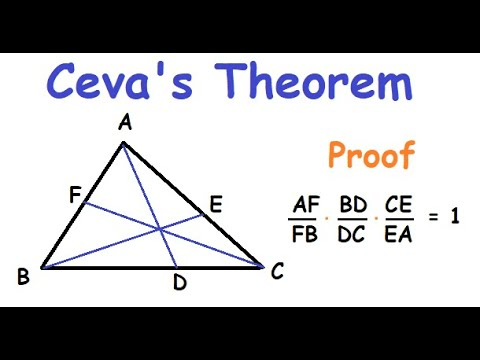
    But it didn’t stop there. The real challenge came when applying Menelaus’ Theorem to complex figures — especially those involving multiple transversals or extended sides. It required sharp reasoning and precise ratio manipulation, not just memorization. The teacher pushed us to understand why each ratio is set up the way it is, and how the theorem connects to Ceva’s Theorem, its “dual” in geometry.

    The best part? Seeing how Menelaus’ Theorem ties together geometry and algebra. Every step felt like balancing logic and calculation — a beautiful blend of precision and insight.

    In conclusion, today’s lesson reminded me that geometry isn’t just about shapes and lines; it’s about relationships — hidden connections waiting to be discovered. And Menelaus’ Theorem? It’s one of those keys that unlocks deeper geometric reasoning.

  • Today’s computer science lesson was all about deepening my understanding of programming concepts — especially strings, procedures, and functions — while practicing with some IGCSE past paper questions. It wasn’t just about remembering syntax; it was about truly understanding how these parts of a program work together to make code efficient, clear, and reusable.

    We started with strings, which at first seem simple — just text data. But once you start slicing, searching, and combining them in algorithms, they become incredibly powerful. I worked through questions that required reversing strings, counting characters, and validating inputs. Every small operation demanded careful logic, especially when combining multiple string-handling techniques at once.

    Then we moved into procedures and functions — the real backbone of structured programming. The focus was on designing programs that are modular, meaning each task is handled by a separate block of code. I learned how to decide when to use a procedure (when no value needs to be returned) versus a function (when something does). This might sound basic, but IGCSE questions can twist these ideas in tricky ways, especially when parameters, local variables, and scope come into play.

    What made today’s study session feel advanced was applying everything together. For example, I practiced writing pseudocode that processes strings inside functions, sends data through procedures, and uses return values efficiently — all while sticking to IGCSE formatting and clarity standards.

    By the end of the lesson, I could confidently read and write structured pseudocode that handles string data using custom-designed procedures and functions — something that felt confusing at first but now makes total sense.

    In conclusion, today’s computer science work wasn’t just a review — it was mastery in progress. Combining string manipulation with modular program design showed me how powerful and elegant programming can be when each part fits perfectly together.

  • Today’s math lesson was all about going back to Thales’ Theorem — not the circle version, but the one about ratios in triangles when a line is drawn parallel to one of the sides. It might sound simple at first, but once you start solving the advanced problems, you realize how much geometry, algebra, and logic this theorem actually holds.

    That single theorem connects everything — it’s the foundation of similar triangles, ratios, and proportional reasoning.

    In class, we didn’t just apply it to easy cases. We went through complex geometry problems where multiple parallel lines divided triangles into smaller parts, and we had to find unknown lengths using proportion chains. Some questions even mixed in algebraic expressions, requiring careful setup and substitution to find exact segment ratios.

    What made this lesson advanced wasn’t the formula itself — it was how it was used. We had to think logically about which triangles were similar, how the sides corresponded, and why the ratios remained consistent. It’s one of those topics where you can’t just memorize; you have to see the relationships and understand the geometry behind them.

    By the end, I was able to solve some really tricky problems where Thales’ Theorem was the key that unlocked everything. It’s amazing how something that looks so simple — a few parallel lines — can lead to such deep and elegant mathematical reasoning.

    In conclusion, today’s class reminded me that geometry isn’t about drawing shapes; it’s about finding hidden relationships. And Thales’ Theorem? It’s one of the most powerful tools for doing exactly that.