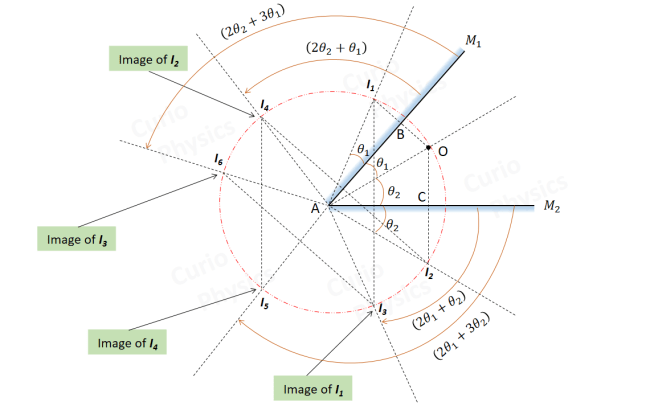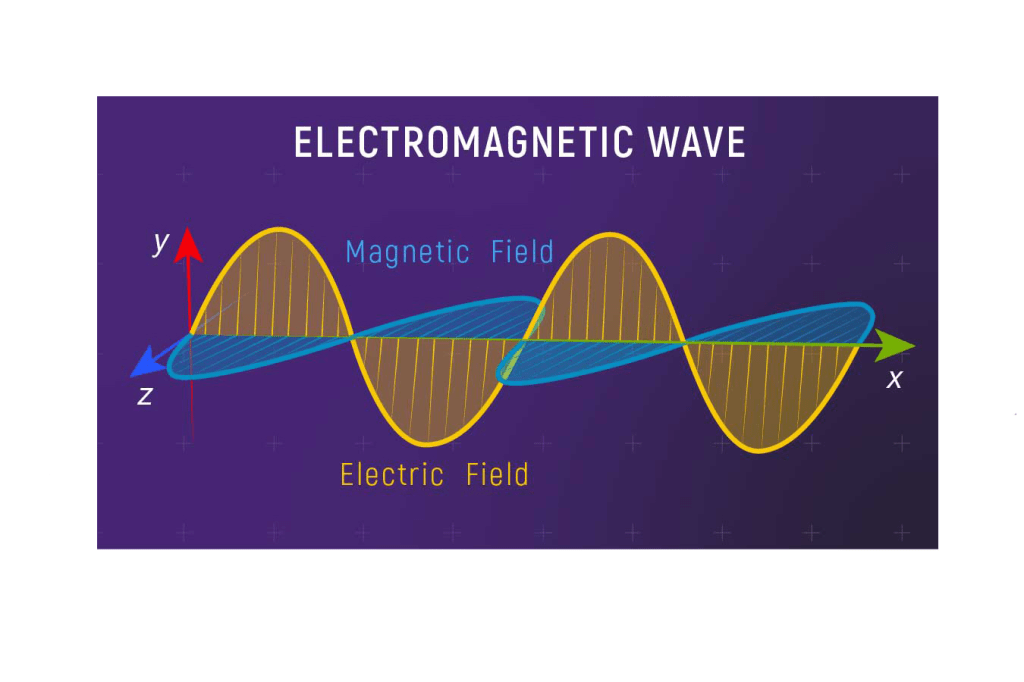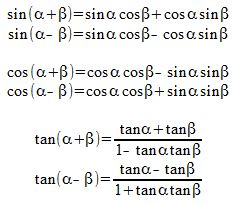
• Today’s physics lesson was a real challenge — not because it introduced something completely new, but because it pushed refraction into its most advanced and geometric form. We weren’t just drawing simple light rays crossing from air to glass; we were diving into complex geometric relationships, multi-layered media, and the fascinating phenomenon of total internal reflection.

    At first, we reviewed Snell’s Law — the classic equation​. But instead of just plugging in numbers, we analyzed why it works and how it behaves in extreme situations. We tackled problems where light passed through multiple prisms, curved interfaces, and even non-symmetric shapes. Every question was basically a geometry puzzle wrapped in physics — finding exact angles, tracing multiple refractions, and using trigonometric reasoning to predict where the light would end up.

    Then came the highlight: total internal reflection (TIR). That’s when the light doesn’t refract out at all — it bounces back entirely inside the medium. It sounds simple, but the logic behind it gets deep. We had to determine critical angles, understand optical density gradients, and visualize how energy behaves at the boundary between two media. It was incredible seeing how a small shift in angle could completely change whether light escapes or stays trapped.

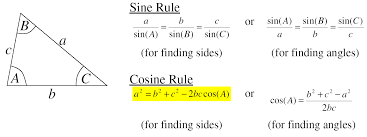
    What made this lesson feel advanced was the precision. Every calculation depended on exact geometry — one degree off and the diagram would be wrong. We used everything from sine rules in triangles to vector components of light rays to handle complex refractive pathways.

    By the end, we weren’t just learning how light bends — we were mastering how geometry and physics work together to control it. It’s the same principle behind fiber optics, diamond brilliance, and even mirages.

    In conclusion, advanced refraction isn’t just about light changing direction — it’s about precision, logic, and the art of understanding how the invisible world of waves interacts with the shapes we draw. Today, light didn’t just bend — my mind did too.

  • Today’s physics class was all about one of the most fascinating — and slightly terrifying — topics in science: radioactivity. Even though it’s part of the IGCSE syllabus, our lesson went much deeper than just “atoms decay and release radiation.” We explored why radioactivity happens, how it’s detected, and the incredible balance of danger and usefulness that comes with it.

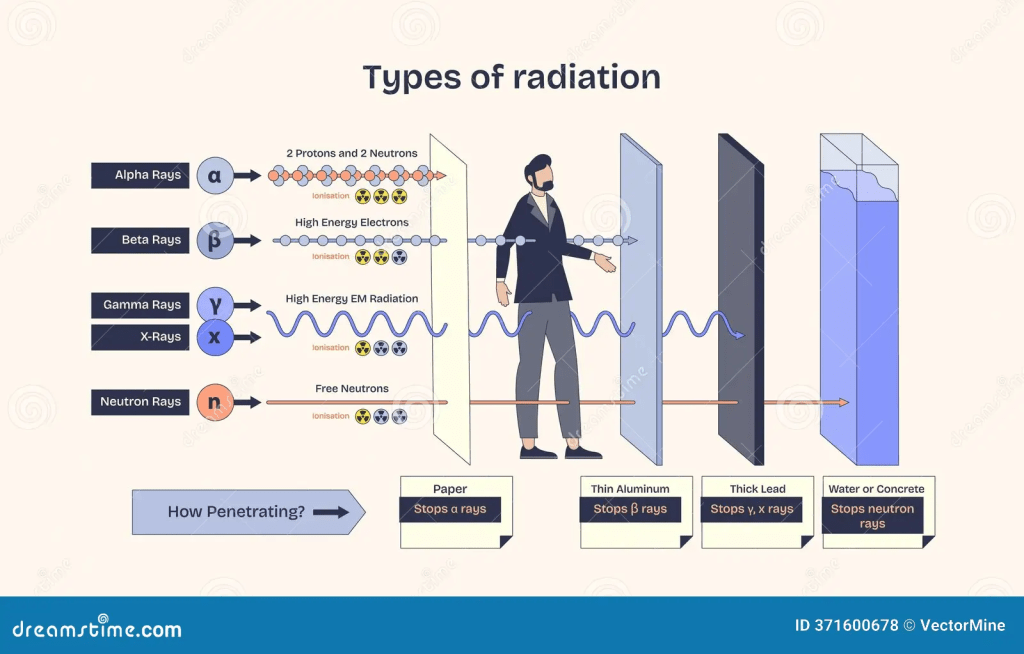
    We started by revising the basics — the structure of the atom, with protons and neutrons in the nucleus and electrons orbiting around it. Then came the main event: unstable nuclei. I learned how some nuclei have too much energy or the wrong ratio of protons to neutrons, so they release energy to become more stable. That’s when the three main types of radiation come in — alpha (α), beta (β), and gamma (γ) — each with different strengths, speeds, and penetrating powers.

    But this lesson wasn’t just about definitions. We went into the mathematical and experimental side of things too. We studied half-life, which shows how the activity of a radioactive isotope decreases over time — and solving those decay equations really showed how math and physics connect perfectly. We also discussed real-life uses of radioactivity: medical imaging, carbon dating, and industrial detection — plus the precautions scientists take to handle these materials safely.

    The best part was understanding how radiation isn’t just some random danger from movies — it’s a powerful natural process that scientists can harness when they understand it properly. From nuclear power to cancer treatment, radioactivity plays a massive role in modern technology and medicine.

    In conclusion, today’s lesson was both intense and inspiring. Radioactivity is one of those topics that reminds me how physics reveals the hidden workings of the universe — the things happening inside every atom, all the time, silently shaping the world around us.

  • Today, I spent my study session going over all the core parts of chemistry I’ve learned so far — the fundamental concepts that form the backbone of everything in IGCSE. It wasn’t about learning something completely new this time, but rather about revisiting and reinforcing what I already knew — and honestly, it felt great seeing how much more sense everything makes now compared to when I first learned it.

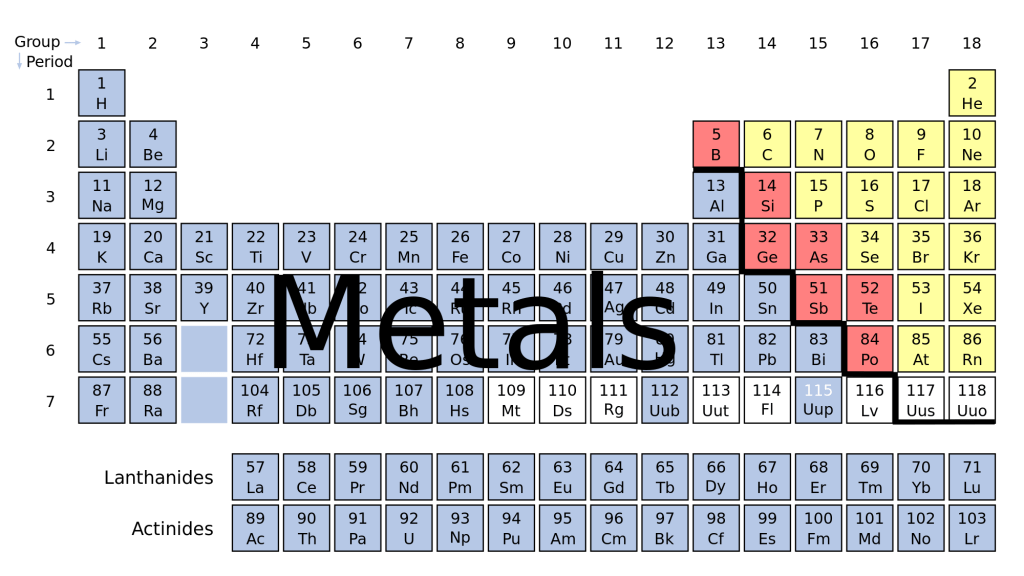
    I went through topics like atomic structure, chemical bonding, periodic trends, and reactivity — and this time, I wasn’t just memorizing facts or definitions. I was focusing on why things happen: why ionic compounds form, why metals conduct electricity, and how molecular structures actually determine the physical and chemical properties of substances.

    What made it even better was linking different ideas together — like connecting electrolysis to ionic bonding, or understanding how energy changes in reactions relate to the concept of bond formation and breaking. It’s all interconnected, and seeing the full picture makes chemistry feel a lot more logical and less like a pile of random information.

    Even though this was technically a “review,” the problems I practiced weren’t simple. They forced me to apply what I learned in different contexts — especially when balancing tricky chemical equations or predicting the products of reactions under specific conditions. It reminded me that chemistry isn’t just about knowing; it’s about thinking scientifically.

    In the end, this restudy session wasn’t just revision — it was reinforcement. I walked away not only remembering the facts but actually understanding how they fit together in real-world chemistry. Sometimes, going back is exactly what you need to move forward.

  • Today’s physics lesson wasn’t just about “kinetic” and “potential” energy — it was about how energy behaves when the world gets complicated. Instead of simple falling objects or swinging pendulums, we went deep into the kind of problems that make you think like a real physicist — where geometry, motion, and energy conservation collide in a single elegant mess of math.

    The main challenge was understanding how mechanical energy transforms in non-linear systems — for example, a ball rolling down a ramp that curves into a loop-the-loop structure. On paper, it looks simple: potential energy converts into kinetic as the ball rolls down. But in reality, it’s chaos held together by precision. We had to calculate how high the ramp needed to be for the ball to just barely reach the top of the loop without losing contact.

    That means combining energy conservation, rotational motion, and normal force analysis. The catch? The ball doesn’t just slide — it rolls, which means part of its energy is locked into rotational kinetic energy. That tiny change completely alters the equation.

    The equations stretch into multi-layered expressions that test both your algebra and your understanding of physics principles. Then, to find the minimum height of the ramp, you need to use centripetal force conditions at the top of the loop. That’s when the true fun began — connecting all these together, and realizing the elegant balance between energy and geometry.

    What made it really advanced wasn’t just the formulas — it was the reasoning. Every variable mattered, every assumption (like “no friction” or “perfect rolling”) could break the model. You can’t just “plug numbers” — you have to understand the system.

    By the end, I had a deep appreciation for how kinetic and potential energy aren’t just opposites — they’re partners in a perfect physical dance. The deeper you go, the more beautiful the equations become.

  • Today’s physics lesson was absolutely wild — we dove into multi-body heat transfer, the kind where you can’t just say “Q lost = Q gained” and call it a day. Nope. This was the real deal — interconnected systems of solids and liquids, each with their own mass, heat capacity, and initial temperature, all exchanging energy like a chaotic orchestra until thermal equilibrium hits.

    At first, it seemed simple — just a few bodies exchanging heat. But when everything started happening simultaneously, the math turned insane. I had to set up systems of nonlinear equations, linking every object’s temperature change through the principle of energy conservation.


    But here’s the twist — some bodies were connected, others were insulated, and a few were liquids mixing with solids. That means additional variables: latent heat, phase transitions, and variable heat capacities. It quickly turned into a jungle of simultaneous equations that required real logical precision — no shortcuts allowed.

    We even explored cases where temperature exchange wasn’t instantaneous, introducing time-dependent heat flow governed by exponential models

    Then, imagine three or four such systems, all interacting at different rates. Yeah… it was like juggling calculus, algebra, and physics all at once — and one wrong simplification meant the entire thing would crumble.

    What really made it “super advanced” wasn’t memorizing any formula — it was strategizing how to handle the system. Sometimes symmetry helped simplify things; other times, the trick was to reduce one body’s behavior to an equivalent heat reservoir or use iterative substitution until equilibrium made sense.

    By the end of the lesson, I had multiple pages of equations filled with fractions, exponential decay terms, and temperature differences — but the satisfaction when everything balanced perfectly was just chef’s kiss.

    In short — today’s lesson proved that heat transfer isn’t about plugging numbers into simple equations. It’s about truly understanding how energy dances between bodies — and using math like a weapon to capture that chaos.

  • Today’s physics class took things to an entirely new level — we explored electricity transmission at a very advanced level. This wasn’t the kind of lesson where you just memorize Ohm’s Law or plug numbers into formulas. No — this was about understanding the system itself: how energy flows, transforms, and resists through an entire network of connections.

    What made this lesson fascinating was that it wasn’t centered on memorizing equations, but on solving complex, multi-layered problems that required deep reasoning. We studied real-world transmission systems — circuits that included multiple resistors, transformers, and long-distance energy loss. Each problem forced us to think in terms of energy efficiency, potential difference management, and minimizing power loss during transmission.

    Instead of just applying P=I2RP = I^2RP=I2R or V=IRV = IRV=IR, we had to analyze why certain arrangements were better. The key challenge was understanding the logic behind the setup, not just doing calculations. It felt like solving an engineering puzzle — every assumption, every simplification, had to make physical sense.

    My teacher also gave us problems that looked nearly impossible at first glance: multi-loop circuits, power distribution grids, and efficiency optimization under variable conditions. But by carefully visualizing current flow, re-drawing circuits into simpler equivalents, and reasoning about voltage drops, I managed to solve most of them correctly. It wasn’t easy — it required creativity, logic, and patience — but the satisfaction of getting the right answer was incredible.

    In conclusion, today’s lesson showed me what true physics thinking looks like. It’s not about memorizing; it’s about understanding systems deeply and reasoning through problems with clarity and precision. Electricity transmission might sound like just another topic — but when you reach this level, it’s pure intellectual art.

  • Singapore Mathematical Society - Singapore Mathematical Olympiad 2020 is  postponed till further notice. | Facebook

    Today’s math session was all about pushing my limits — I spent hours working through past Singapore Mathematics Olympiad (SMO) problems, and wow… these questions are no joke. They’re not like the usual textbook exercises with neat formulas and clear paths. Each SMO problem feels like a puzzle, demanding creativity, logic, and a really deep understanding of mathematical principles.

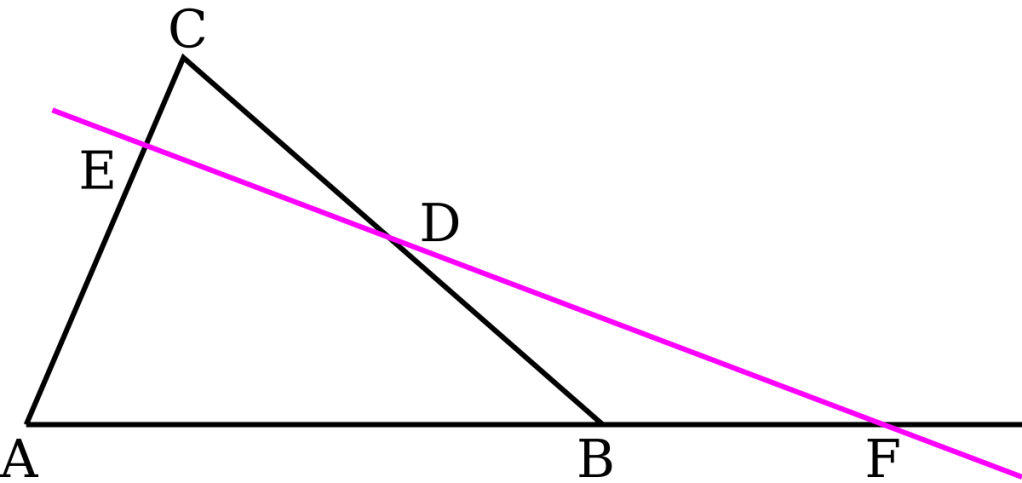
    The first thing I noticed is that SMO problems test how you think, not just what you know. Some questions start simple but twist into something completely unexpected halfway through. For example, one algebra problem I worked on looked normal until it suddenly required a clever substitution and pattern recognition to simplify it. Geometry ones were even trickier — the diagrams always hide a symmetry or a hidden ratio that you have to discover yourself.

    I also realized that doing these problems is less about memorizing formulas and more about connecting ideas. You might have to mix number theory with algebra, or geometry with combinatorics, just to get one question right. It’s like every problem is testing how flexible your brain can be.

    Even though it’s tough, solving (or even attempting) SMO problems feels incredibly rewarding. Every time I finally crack one, there’s this rush — like unlocking a secret that only patience and logic can reveal. And even when I get stuck, I learn something new from the solution that helps me see math from a totally different angle.

    In short, studying SMO past exams isn’t just preparing me for competitions — it’s training my mind to think sharply, creatively, and rigorously. It’s difficult, yes, but it’s also what makes math exciting.

  • Today’s physics class was focused on liquids — but not the easy, predictable kind of problems. The ones we tackled today were hard. Not just because of the formulas, but because they required deep understanding of how liquids behave in every possible situation.

    We studied communicating vessels, but instead of basic questions, our teacher gave us complex cases — vessels with different cross-sectional areas, connected by slanted tubes, and even some contain solid objects. Solving them wasn’t about memorizing formulas; it was about truly understanding pressure equilibrium and how each point in the fluid responds to gravity. Every small change in shape or liquid type could flip the entire result, so we had to think carefully and visualize the forces in detail. The problems we solve also heavily rely on geometry.

    Then came Archimedes’ Principle, but again, the problems were far beyond the usual “floating or sinking” type. We worked on situations where the buoyant force changed dynamically — like objects partially submerged in two different liquids, or bodies whose volume shifted as they rose or sank. Some problems even required simultaneous equations to balance forces and find exact submerged depths. It felt more like a puzzle than a normal exercise — every step had to be perfectly reasoned.

    By the end, my brain felt like it had done a marathon — but in a good way. These tough problems showed how beautiful physics can be when you fully understand the phenomena behind the formulas. It’s not just about solving; it’s about thinking like a physicist, and in our school, that’s exactly the kind of challenge I enjoy most.

  • Today’s English lesson with my teacher was once again focused on IELTS Task II writing — something we’ve practiced many times before. Even though we’ve done it several times already, each session helps me understand the structure and techniques more deeply.

    We reviewed the essay format: introduction, body paragraphs, and conclusion. My teacher reminded us that a strong thesis statement sets the direction for the whole essay, and every paragraph should support it clearly. In the body paragraphs, we worked on developing ideas with logical explanations and real examples, while using linking words like moreover, however, and for example to make our writing smoother and more cohesive.

    Since we’ve practiced this multiple times, today’s lesson felt more like polishing our skills rather than learning something completely new. My teacher focused on the finer details — how to maintain a consistent tone, avoid repetition, and write conclusions that leave a strong impression.

    Even though the topic is familiar, I still find every session useful. Each time, I pick up new tips that help me write more confidently and naturally. Step by step, I’m getting closer to mastering IELTS Task II writing!

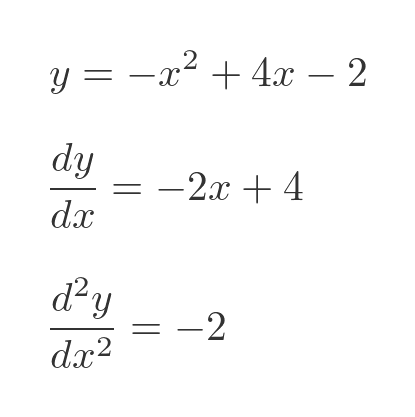
  • In today’s extra math class, we revisited derivatives, something I’d already learned before in another class — but this time, we went more in-depth and connected all the concepts together. At first, we reviewed the basics: understanding a derivative as the instantaneous rate of change or the slope of a tangent line at any point on a curve. It’s like zooming in infinitely close on a graph and seeing how fast it’s rising or falling right there.

    After warming up with simple rules, like the power rule (d/dx[xn]=nxn−1d/dx[x^n] = nx^{n-1}d/dx[xn]=nxn−1) and basic derivatives of constants and linear terms, we got into more detailed rules — the product rule, quotient rule, and chain rule. These rules make it possible to handle complex composite functions, where terms are multiplied or nested inside each other. It was actually satisfying to see how all these separate pieces fit together logically.

    Then we reached the second derivative — which goes a level deeper. While the first derivative tells you the rate of change, the second derivative shows how that rate itself changes. In simpler terms, it’s like checking whether your function is curving upwards or downwards. We talked about concavity, inflection points, and how the second derivative helps determine whether a point on a curve is a maximum, minimum, or a point where the curve changes direction.

    We also did several practice problems, like differentiating polynomials, rational functions, and even a few that needed multiple rules at once. The best part was realizing how derivatives can describe real-world behaviors — like acceleration, optimization, and motion — and how the math we do on paper actually explains how things move and change in reality.

    Overall, even though this wasn’t my first time learning derivatives, this session helped me understand the structure behind them — not just how to do the steps, but why each rule works. And going all the way to the second derivative really made me appreciate how powerful calculus can be once you start connecting everything together.